Stand in front of the chicken case at any Ontario grocery store and you will see four or five claims competing for your attention. Free run. Free range. Cage free. Raised without antibiotics. Sometimes "farm fresh," which is not a claim at all. They sound like variations on the same idea. They are not.
The frustrating part is that none of them are lies. Each one is technically accurate about a narrow thing. The problem is what they leave out, and the way they are arranged to make you fill in the gap with the picture in your head: a bird on grass, in daylight, doing chicken things.
Start with the one that means nothing
Cage free sounds like a real distinction. For eggs, it is. Laying hens have historically been kept in cages, so a cage-free egg carton is telling you something.
Meat chickens are a different story. Birds raised for meat in Canada are not kept in cages, and never have been at any commercial scale. They live loose on the floor of a barn. So "cage free" on a package of chicken breasts describes the industry default. It is like labelling water "gluten free." True, and empty.
Free run is a barn. Free range is a barn with a door.
Free run is the Canadian term for exactly what cage free implies: the birds can move around inside the barn. No outdoor access is involved or promised. This is how most conventional chicken in Ontario is raised.
Free range adds outdoor access. What it does not add is a definition of how much, how often, or whether the birds actually use it. There is no regulated minimum in Canada for the size of the outdoor area, the number of hours, or the proportion of the flock that goes outside. A small door at one end of a large barn, opened for part of the day in the warm months, can qualify.
That is the gap. Free range tells you a door exists. It does not tell you the chicken went through it.
Read the label in five seconds
Tap a claim to see what it does and does not promise.
Pasture raised is a different way of farming, not a better label
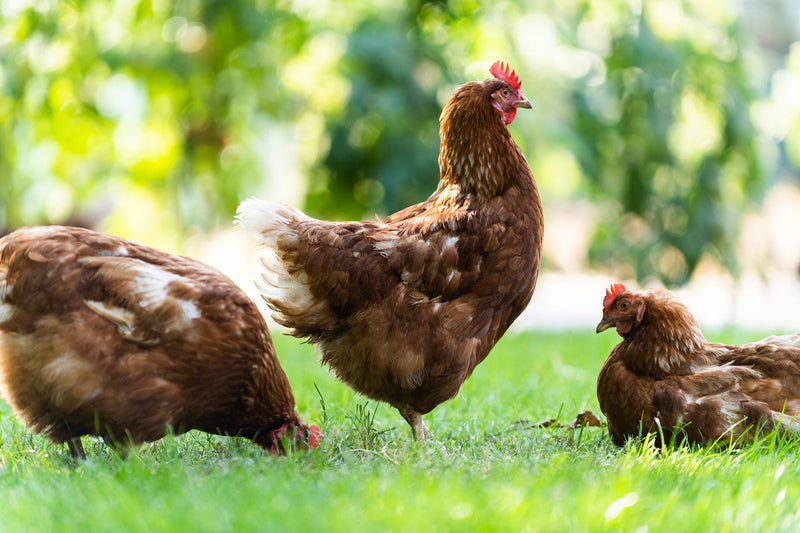
A pasture raised chicken spends its life outdoors on grass, in mobile shelters that get moved so the flock is always on fresh ground. The birds eat what a chicken is built to eat: forage, insects and grain, in daylight, with space to move. The barn is where they sleep, not where they live.
It takes longer, it takes more land, and it produces a bird with more texture in the meat and a flavour you notice immediately if you have only ever cooked grocery chicken. It also cannot be done at the scale a grocery chain needs, which is why you will almost never see the phrase on a supermarket package.

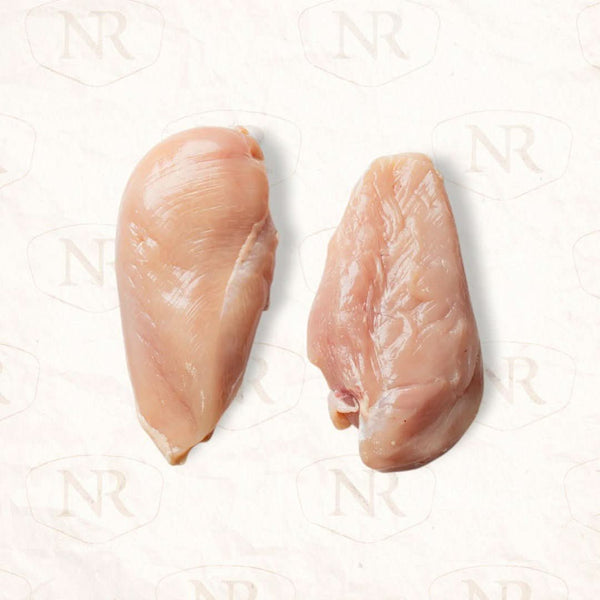
10 lb. Chicken Breast Special
Then add the only word with an inspector behind it
Every claim above except one is self-declared. Free range, free run and pasture raised are all descriptions the farm or brand writes on the package. Some are honest. There is no one checking.
Certified organic is different. Under the Canada Organic Regime, an organic chicken has to be raised on certified organic feed, with no antibiotics, with outdoor access, and the farm has to be inspected by an accredited third party every year to keep the certification. The logo on the package is a claim someone else verified.
What organic does not guarantee on its own is pasture. The outdoor access requirement is real, but it can be met with a yard. So the strongest chicken you can buy carries both: certified organic for the feed, the antibiotics and the audit, and pasture raised for how the bird actually lived. Our chicken is both, and the farm it comes from has been doing it since before either label existed.
Want to taste the difference before you commit to a full order?
Join the list and we will send a 10% code for your first order, plus the question to ask any butcher that sorts the honest ones out in a sentence.
One email with your code. Unsubscribe any time.
That did not go through. Try again, or email support@northernraised.ca and we will send the code.
Your code is on its way. Check your inbox.
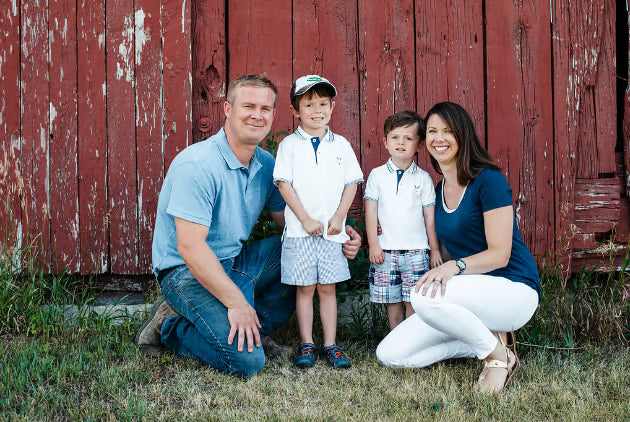
Ahrens Family Farm
Six-generation family farm committed to organic chicken farming since 1890. Their name is on every chicken product page we sell, so you can check for yourself.
Read their storyThree questions to ask before you buy chicken anywhere
You do not need to buy from us to get this right. Ask these of any butcher, brand or box, and the honest ones will answer in a sentence.
How much of the bird's life is spent outdoors?
A pasture farm answers with "all of it, weather permitting." A free range operation answers with something about a door. The difference in the answer is the difference in the chicken.
Is it certified organic, or "raised without antibiotics"?
"Raised without antibiotics" is a real and useful claim, but it is only about antibiotics. Certified organic covers antibiotics, feed and outdoor access, and someone inspects it. If a brand says organic, ask to see the certifier's name.
Which farm did it come from?
A name you can look up is the strongest claim in the category. "Ontario farms" or "our network of producers" is not a name. Every product page on our site shows the farm that raised it.
That is the whole guide. Ignore cage free, treat free range as a question rather than an answer, look for pasture raised and certified organic together, and ask for the farm. If a label passes all of that, buy with confidence, whoever is selling it.